It’s difficult to detail the history of the Kentucky Derby without its companion race, the Kentucky Oaks. While it took much longer for the Oaks to gain the social and cultural recognition garnered by the Derby, the two races have been a pair from the beginning, dating back to 1875 at Churchill Downs.
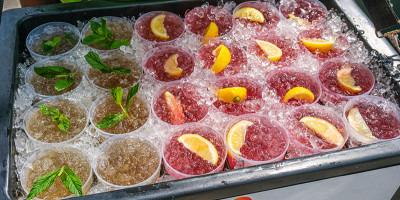
Both the Derby and the Oaks carry strong traditions, but some go back in history much further than others. Derby stories aren’t complete without the tales of mint juleps, the gold trophy, garland of roses, and iconic fashion. Likewise, today, it seems difficult to imagine an Oaks without a sea of pink ensembles, a garland of lilies, silver trophy, and signature cocktail. While many of the beloved Derby traditions were well established within the first half of the 1900s, Oaks Day staples have really only gained popularity within the past two decades.
May 1, 2026 will mark the first Kentucky Oaks on primetime television. It comes with an opportunity for a larger audience and national stage, but also a later start time for the race. Kentucky Derby Museum Senior Curator of Collections Jessica Whitehead notes this is not the first time for the Oaks to see schedule changes. She said in fact, throughout history, the Kentucky Derby and Kentucky Oaks have been held on different days, times, and even sometimes, not in the month of May.
“What we understand as this ‘first Friday in May, first Saturday in May,’ is something that really only came about within a couple generations,” said Whitehead. “The Oaks, of course, is something that didn’t really have the same kind of pull, the same kind of social attraction as the Derby. It didn’t get the same kind of media attention and certainly didn’t get the same kind of attendance for a really, really long time.”
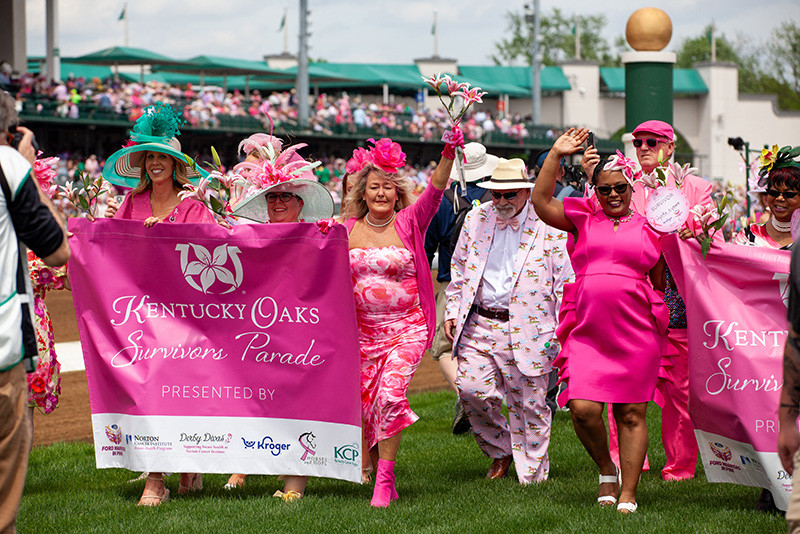
Whitehead said the Oaks didn’t reach a crowd of 100,000 people until 2001. It was at that point the traditions many have come to know and love became engrained within the culture of the race. In the years since, its popularity has only continued to rise. Whitehead said the Oaks has always been loosely associated with ladies and pink because it’s a contest between young, female horses called fillies. However, traditions like the lily cocktail and Oaks glass didn’t begin until 2005. Also, the famous Survivors Parade – honoring breast and ovarian cancer survivors – only began in 2008.
“With the move to primetime in 2026, the Oaks is really – I think – going to see some incredible new traction, going to get some really incredible new attendance, and I think we’re going to see it really just rising to the level that the Derby has, because of that kind of media presence and attendance,” said Whitehead.
As the Oaks grows in popularity and its traditions become more rooted in the culture of the race, the history grows, too. While the Derby tradition of a garland of roses dates back well into the history books, Whitehead said the first garland of lilies for the Oaks wasn’t awarded until 1991. That year, Lite Light won the contest between the fillies. The iconic trophies we’ve come to know for the Oaks and Derby were both introduced in 1924. However, there are striking differences between them. The gold Derby trophy is smaller, engraved with the champion’s name, and goes home with the winner each year. In contrast, the silver Oaks trophy is much larger and is perpetual, engraved with each winning filly’s name dating back to the first race in 1875.
The Oaks trophy has a permanent home on display at the Kentucky Derby Museum. It is kept in the Oaks exhibit on the museum’s first floor, where visitors can see the engravings for themselves. The exhibit also includes a garland of lilies and other Oaks mementoes, highlighting its significance in Derby history.