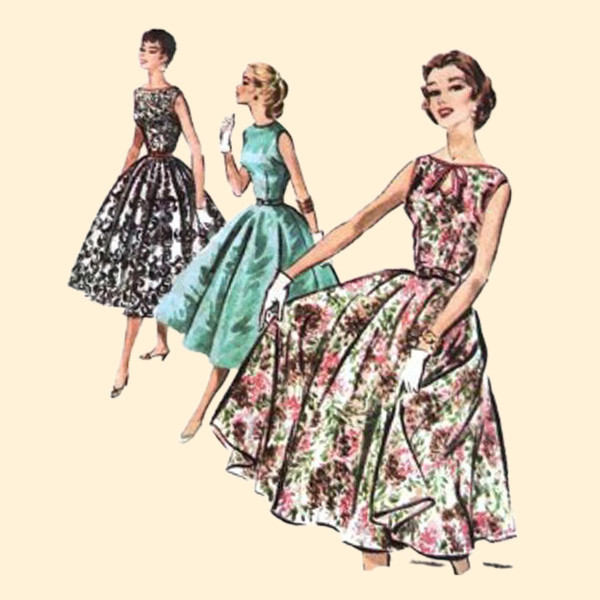
1950-1960 Women wore dresses in a variety of colors that employed such feminine details as frothy layers over taffetas, lace, net, and chiffon. The silhouette was kind to a woman’s figure and often featured wide but soft shoulders, a corseted waist and full hips.
1960-1970 Young people were serious consumers during this decade and were quickly growing tired of the conservative 1950s. Designers responded with the creation of the miniskirt, which could be worn in the evening, and the trapeze dress, which was often embellished with sequins, beading, or feathers.
1970-1980 Fashion was increasingly varied during this decade: a woman was still fashionable in miniskirts, pantsuits, or the maxi dress. The disco look also began trending with slinky dresses, harem pants, and hot pants that made for some eventful nights. Polyester was also an important fabric of the 1970s and it was present in both casual wear and evening gowns.
1980-1990 In the late 1980s, shorter cocktail dresses were very much in vogue. Ensembles were frequently accessorized with giant pearl chokers, long stranded necklaces or sparkling diamond tennis bracelets, all a nod to the luxury worship of the day.
1990-2000 Dresses were commonly more staid, even if they featured severe lines and detailing, the color of the dress was often black. In the South, women were often more resistant to the newfound minimalism and remnants of the 1980s hung around until mid-decade in some parts of the country.
2000-2010 Throughout the new millennium, gowns did not have to just be black anymore, and many women are embracing a bolder palette. Designers were also changing the architecture of gowns from year to year including adding pockets to evening gowns, producing dramatically draped numbers & using shrugs & caplets as the go to accessory to balance our a severely nipped waist.
Today, several fashionable trends are appearing trackside the First Saturday in May.