Outlandish Designs and Dressing to the Nines: 146 Years of Derby Fashion
Part 1: Origins of the Derby Fashion Tradition
For those of you who thought fashion was just about the clothes we put on, think again. The history of fashion is the history of people: how we relate to each other, what our customs and values reveal about us, who we are. As fashion guru Coco Chanel once said:
“Fashion is not something that exists in dresses only. Fashion is in the sky, in the street, fashion has to do with ideas, the way we live, what is happening.”
Outlandish designs and dressing to the nines is synonymous with the Kentucky Derby. In 1906, the Courier-Journal reported, “Everything goes at the races!” From the earliest days—when a beautiful hat and dress was always a la mode, Derby or no Derby—to today, when getting dressed up and wearing a hat is generally saved for a few special occasions, racing fans have always been the best dressed when they watch the Run for the Roses.
Inspiration from Europe
The Derby’s founder, Col. Meriwether Lewis Clark, Jr., visited England and France in 1872 to observe the European racing customs and operations. He and his wife, Mary, were extremely impressed with the elegance, opulence, and history of the overseas tracks.
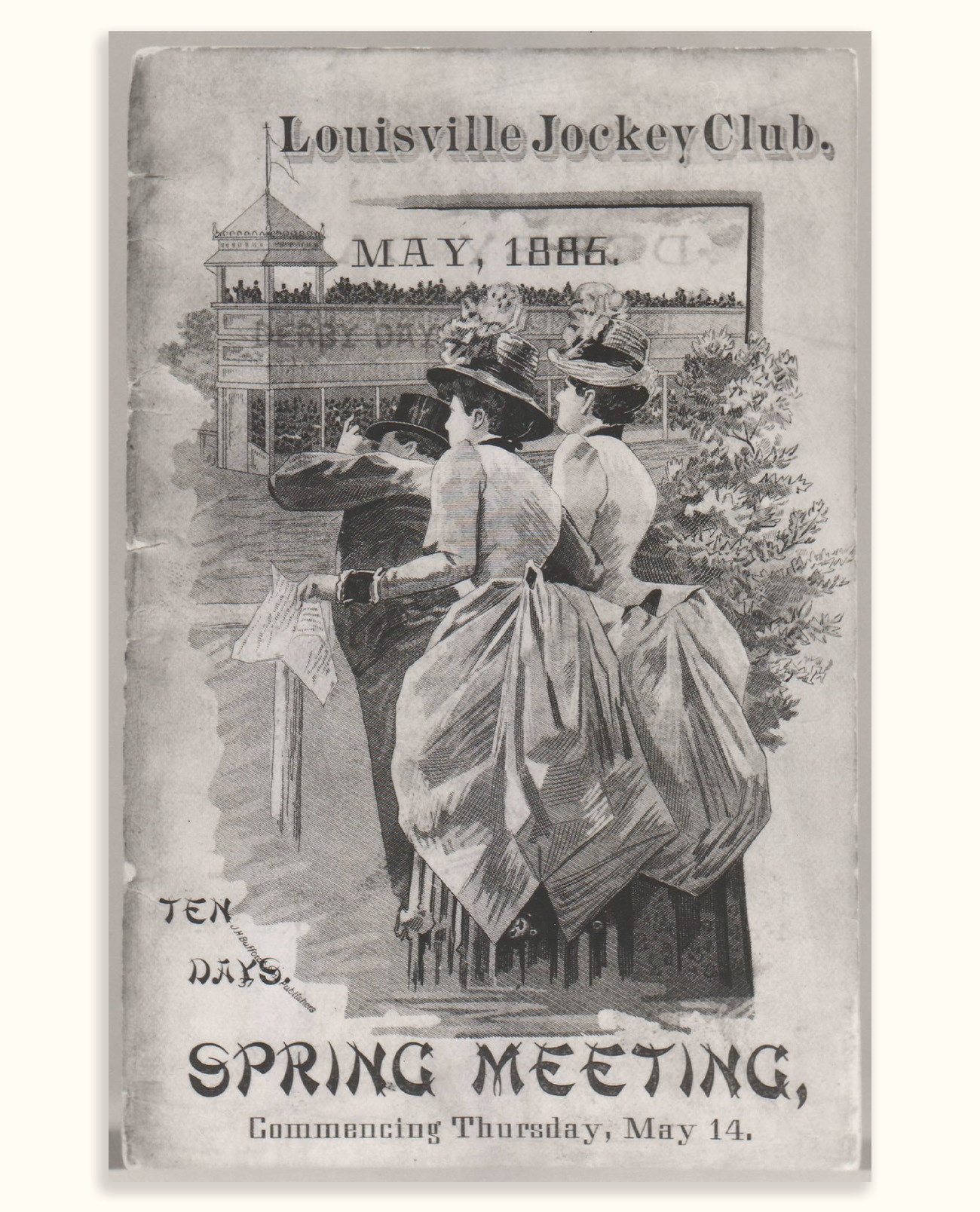
Returning home, Clark created a suite of stakes races for his newly-formed Louisville Jockey Club, located in the south end of the city at the corner of 4th and Central, where Churchill Downs still sits. Two of the special races created for opening day, May 17, 1875, Clark patterned after historic races from Epsom Racecourse in England: the Kentucky Derby and Kentucky Oaks from the Epsom races of the same name.
Along with introducing European-inspired standard weights, modern track rules and regulations, new ways of wagering, and a beautiful clubhouse and grandstand, (Lutie) Clark brought with him the Epsom tradition of going to the races to see and be seen—for both men and women.
In advance of the first Kentucky Derby in 1875, Mary Clark and all of her friends dressed to the nines and rode in open carriages around Louisville to attract socialites and influential folks to attend. Nearly 10,000 people came that first Derby, even though the weather was hot and the track was so dry that the dust was covering the crowd. One attendee wrote to the New York Graphic:
“The ladies, however, were brave to the end. The afternoon sunshine flooded the grand stand and bathed every fair form in golden light. The strong glare of light revealed defects that many divinities were not suspected of possessing. Complexions and other valuable articles were utterly ruined. Still the ladies remained for six hours at least, enduring a crowd, heat and dust not only for love of the horse, but to oblige the gallant gentlemen who had done so much to give them pleasure and exhibit to the strangers that Louisville deserved the fame for which she is credited—of having the fairest daughters in the universe.”