Part 2: New Century, New Looks
The period from 1900-1950 in American history marked a major turning point for women in society, and their wardrobes changed with them. Famous Hollywood costume designer Edith Head once said, “You can have anything you want in life if you dress for it.” What did women want?
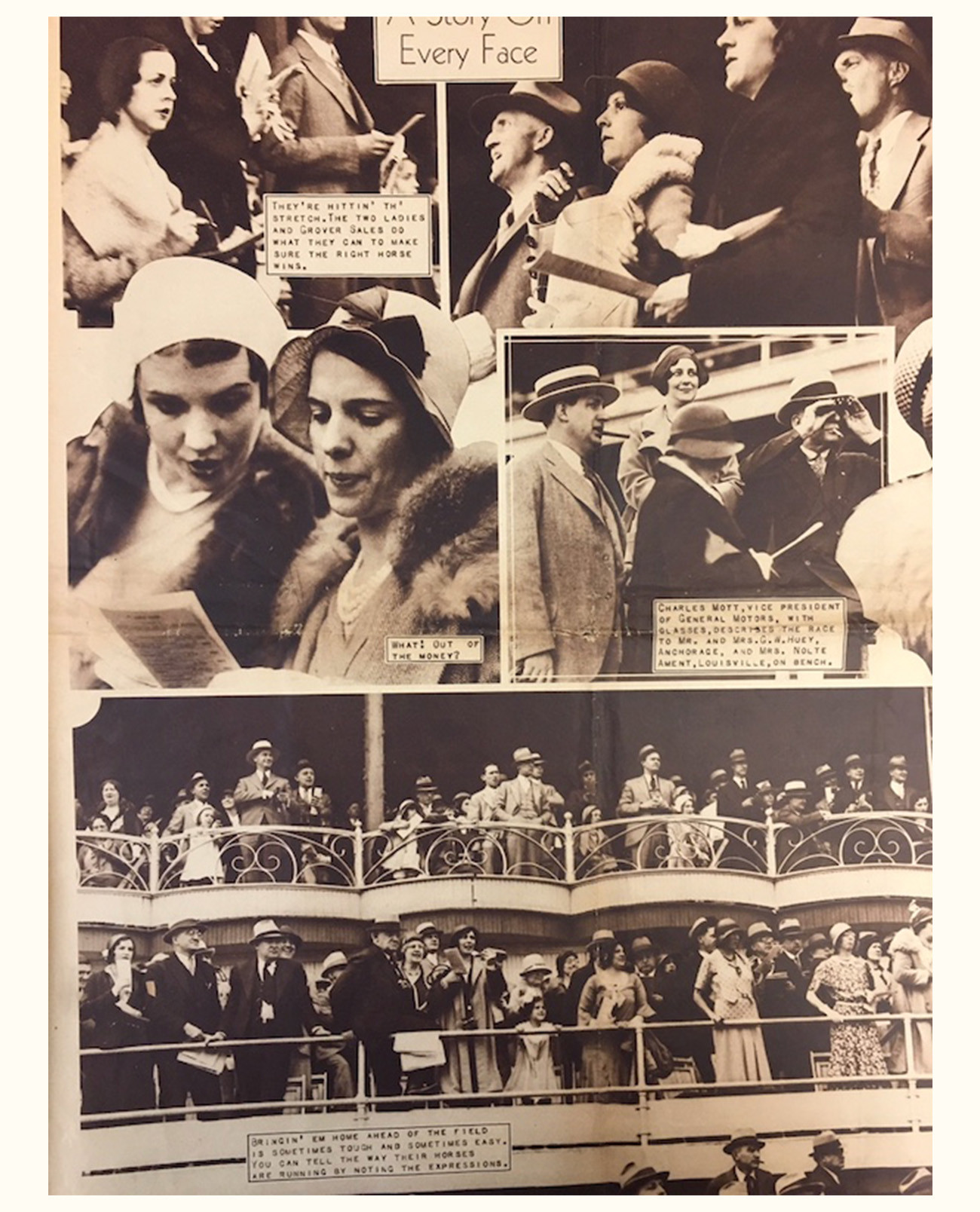
Change. In the era of Women’s Suffrage, women were entering the work force, gaining social mobility, and finding new ways to express themselves as outdated modesty restrictions dropped and hemlines rose. More women wanted to attend the races as well, escorted by dates or—as became more and more frequent—groups of horse-loving girlfriends out to see the sights and place a few bets. Where women had once been the decided minority in the stands at Churchill Downs, the Courier-Journal reported in 1910:
“Fully 75 per cent of the seats were occupied by women, something that has never been witnessed before at the running of the Derby. Those women represented the beauty, refinement and intelligence of Kentucky, Tennessee, Indiana and other States. Their costumes were simply dreams of creation, and the multitudinous colors sparkled like brilliant gems in the warm sun’s rays.”
Part two of our history of Derby ensembles takes a look at the rapidly-evolving frocks and trimmings for fashionable trackside ladies through the Jazz Age and into wartime.
Loosening Up
At the turn of the 20th century, ladies’ looks were still conservative but they were starting to relax.
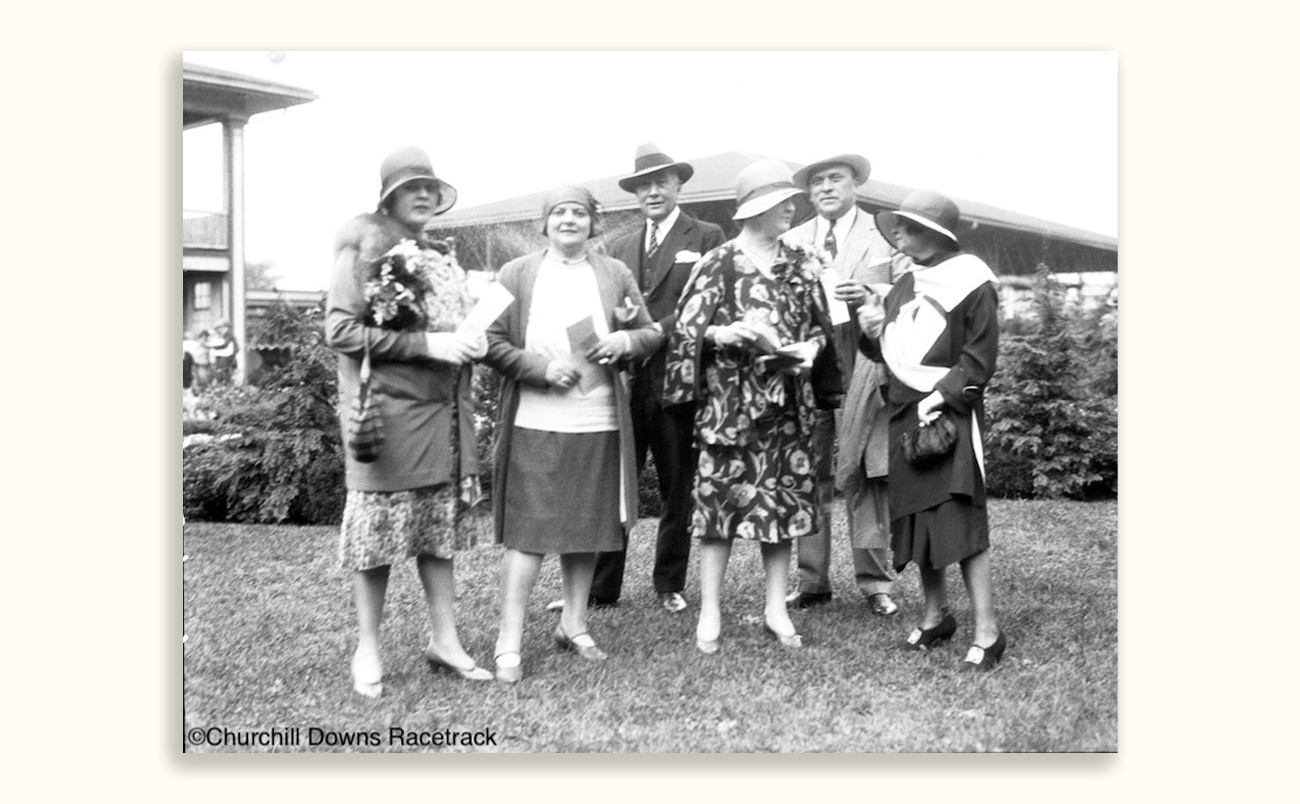
Instead of corsets or bustles, women were opting for looser-fitting sheath dresses with eye-catching elements like intricate beading, embroidery, lace, and fringe. Such feminine accents made a nice contrast to the increasingly masculine silhouettes of women’s clothing, beginning in the early 1900s. The introduction of the tailored women’s suit became very popular for the stylish set. From the Courier-Journal:
“…sport coats that despite their mannish lines were constructed of exquisitely delicate fabrics, including crepe de chine, and skirts with pockets, both broad and deep were noted…there were the new ‘fabric’ hats, and here and there, sable furs that were worth almost as much as the heavy prizes hung up for the big races.”