It’s often the horse getting the glory on Derby Day. History remembers the Thoroughbred’s name, the photo-finish, and the thrilling victory. But the horse doesn’t get there alone. Of course, there’s a jockey aboard, but there’s also an entire team of “connections.” Those connections are the people responsible for owning, training, and caring for the horse.
A horse’s owner has to be willing to take risks. Typically, potential Derby contenders (especially those from successful racehorse bloodlines) aren’t cheap. The owner pays for the horse and all of its care. That includes food, a stable, transportation between racetracks or barns, training, vet visits, and more. Sometimes, a horse’s owner is one individual. Other times, there is an ownership group or partnership that shares the expenses, and therefore gets a chance at sharing the glory of a win. For example, Calumet Farm in Lexington, Kentucky is the winningest owner in Kentucky Derby history, winning eight times since 1941.
Think of a trainer like a teacher or coach. The trainer is the person who works with the horse to make sure the colt or filly is ready for race day. Trainers often work with multiple horses during any given season, and help the owner(s) make decisions about which races to enter. Trainers have very strict schedules, often starting their days before sunrise in the cool of the morning to watch horses work out. Trainers observe, take notes, and make plans for improvement. One of the most famous Thoroughbred trainers in recent history was D. Wayne Lukas. Lukas won the Kentucky Derby four times between 1988 and 1999. The Hall of Fame trainer, known for winning major races, passed away in 2025.
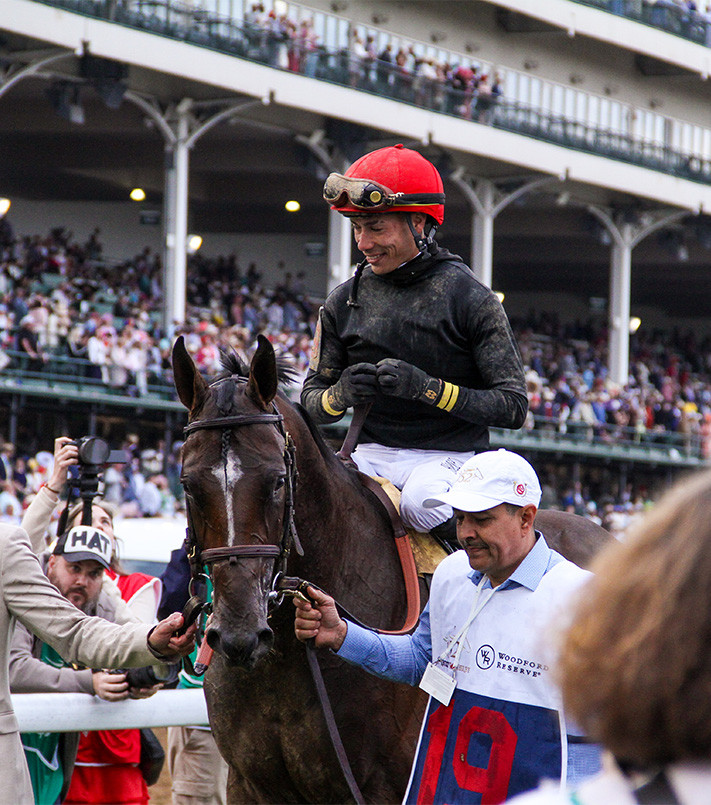
Aside from the horse itself, the most visible member of the winning Kentucky Derby team is the jockey. The jockey is the person aboard the horse, guiding it through the race. Jockeys often work with agents to secure the best mount possible. Jockeys must learn how to work together with the horse and prove their success with other race performances. While there is no official height requirement for a jockey, there are rules when it comes to weight. For the Kentucky Derby, colts (young male horses) must carry exactly 126 pounds and fillies (female horses) must carry 121 pounds. That includes the weight of the jockey and any gear. These athletes must be incredibly strong. After all, they’re guiding a horse weighing around 1,000 pounds! Hall of Fame jockey Pat Day is the winningest rider at Churchill Downs. He won more than 2,400 races at that track alone during his career, including one Kentucky Derby victory that came in 1992 aboard Lil E. Tee.
Owners, trainers, and jockeys can all get multiple chances at a Kentucky Derby victory, if they’re lucky. However, no matter what – win or lose – the horse only gets one shot. It comes down to the biggest factor: their age. All horses racing in the Kentucky Derby are three years old. They can be colts or fillies and be bred anywhere in the world, but they must be a Thoroughbred, and they must be three years old. It’s tough competition to make it into the race, but that’s part of what makes the Run for the Roses so thrilling for all the connections!