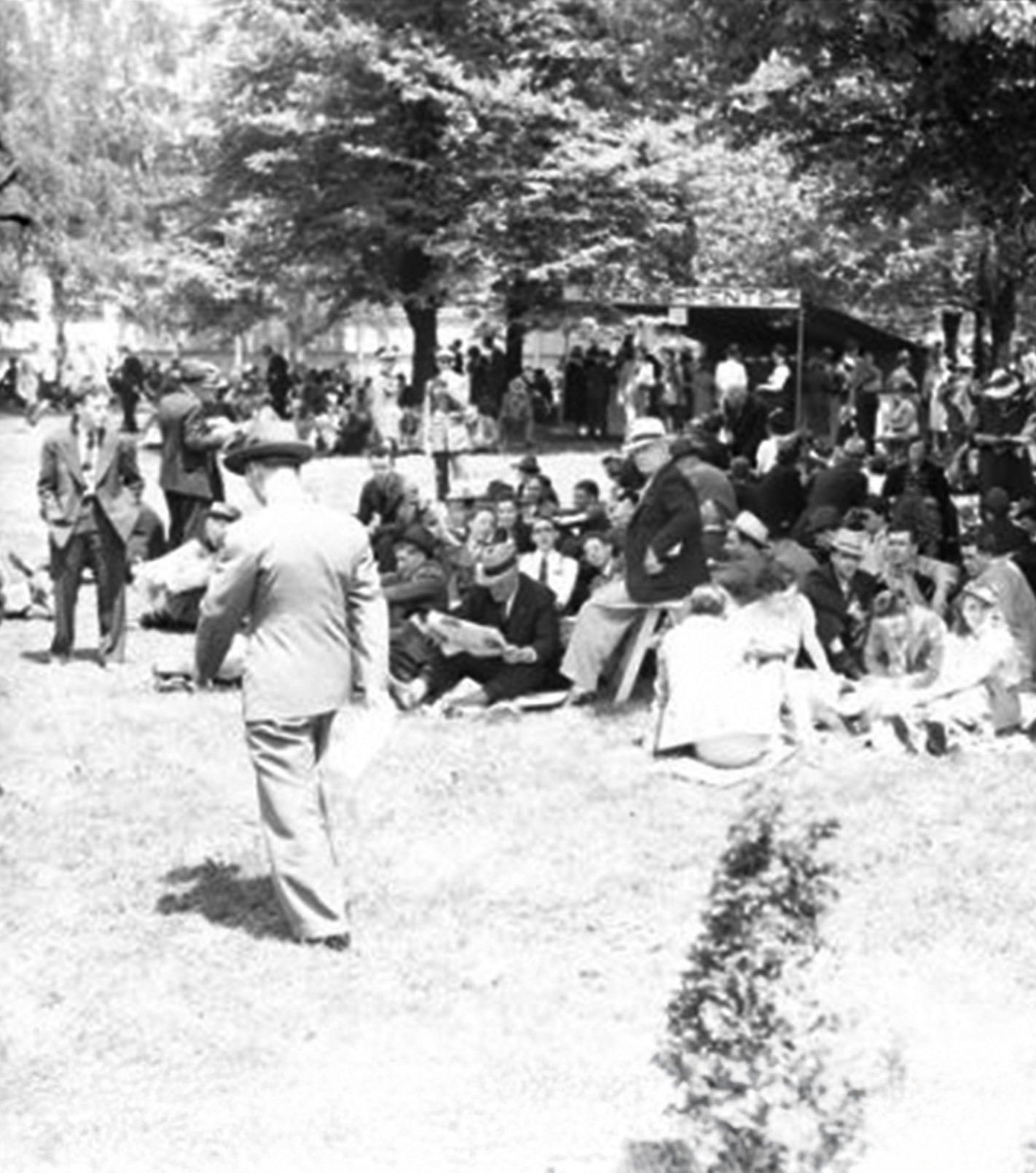
Granted, perhaps admission to the track still applied and this was just to let spectators know they could enter the infield for free. Or maybe it was .50 in 1938 and then free in 1939? We may be overthinking this part of the clue.
6. Also found on Kentuckyderby.com: “Tunnels were constructed under the track in1937 to provide better patron access to the infield, which was also known as the centerfield in yesteryear.”
7. There is one photo floating around on the Internet showing a low aerial of the construction of the tunnel and it is dated 1937. However, this photo only appears on Pinterest so its date cannot be validated.
8. From the Louisville Times, 1937: "The immediate program as mapped out by the maestro of the greatest show in American racing, calls for a terraced infield, a tunnel under the track, a new paddock, new racing secretary's office, new cafeteria, new judges' pagoda, additional betting sheds, more terrace seats, new entrances, and additional gardens, just to mention a few of the outstanding features." Still, there is no solid mention of a finish date.
It is a little remarkable that the history of such a great institution can be a little muddy in spots (again, really, no pun intended) but we would like to have an accurate date and put to rest the little mystery of the year the tunnel opened.
Can you help?