

Kentucky Derby Museum
Kentucky Derby Museum
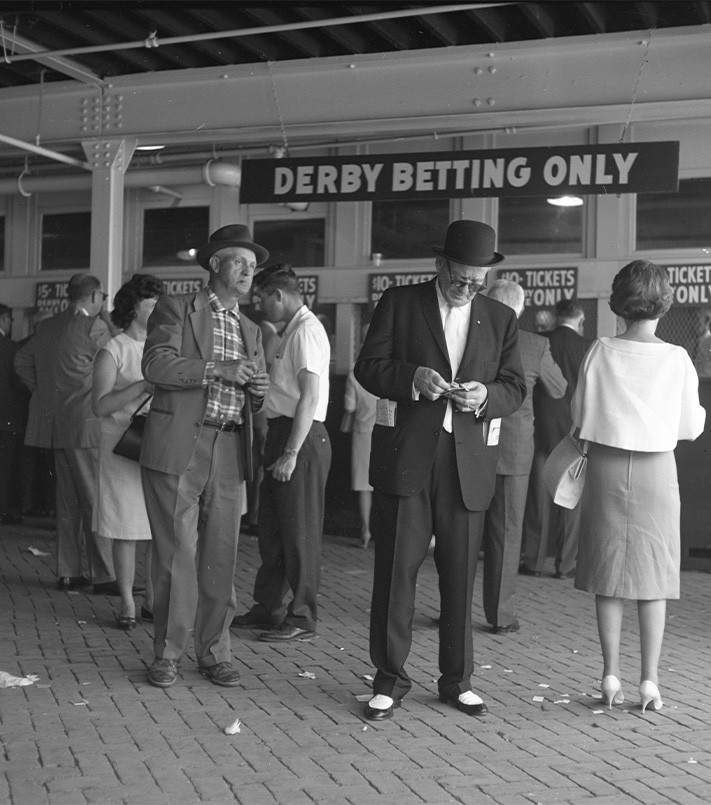
Wagering at the Kentucky Derby dates back to the race’s very first running in 1875. That year, Aristides made history as the champion. Those hoping to cash in on his victory would have largely done so through a wagering method known as an auction pool.
“Someone would auction off the names of all the horses in the race,” explained Chris Goodlett, Kentucky Derby Museum’s Senior Director of Curatorial. “The winnings went to the bidder that selected the winning horse, minus a commission to the organizer of the pool.”
Time brought changes for betting at the track. Auction pools led to bookmaking, but when a 1908 city law banned bookmaking, pari-mutuel wagering became the standard. Goodlett said the pari-mutuel system was deemed “more fair” for wagering, because pari-mutuel machines calculate odds based on people’s individual bets instead of the odds being solely controlled by a person (the bookmaker).
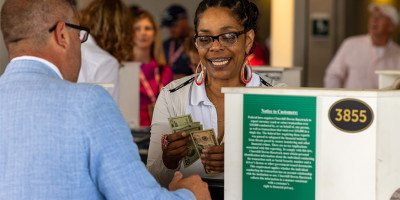
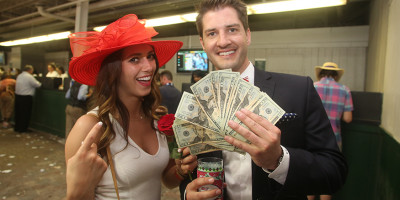
Today, more than 100 years later, the pari-mutuel wagering remains the standard for the Kentucky Derby and Churchill Downs. Betting options have grown over time, but the pari-mutuel system has remained. Fans can simply bet on a single horse to win the race, or try a more “exotic” bet like the superfecta, wagering on the first through fourth place finishers in exact order.
“I think I consider wagering more of an essential part of the industry, and not merely a tradition,” said Goodlett. “Much like having a physical racetrack, horses to run the race, and people to work in all facets of the industry, the wagering component of racing helps to make it a viable business venture.”
Kentucky Derby Museum’s collection includes pieces of Derby traditions like fancy hats, mint julep glasses, and even gold trophies. Of course, these stories wouldn’t be complete without sharing the history of wagering at the track. The museum’s archives include approximately 200 items directly connected to wagering. Artifacts range from books outlining rules, to betting signage from Churchill Downs, to racing games, and even an early 20th century pari-mutuel machine.
In 1996, the museum opened an exhibit called Place Your Bets. Its first major update was in 2010, then again in late 2026. Today, the interactive exhibit allows guests to place a pretend bet on a previously recorded Churchill Downs race. Guests use touch-screens to see horses’ odds, choose their favorite, print a ticket, and watch the race.
“First, I hope guests understand that betting can be a complex venture, as many factors are considered when deciding which horse has the best chance to win the race,” said Goodlett. “Second, I hope guests understand that betting can be quite fun, as having at least a small financial stake in the outcome can increase one’s excitement and enjoyment of a day at the races.”
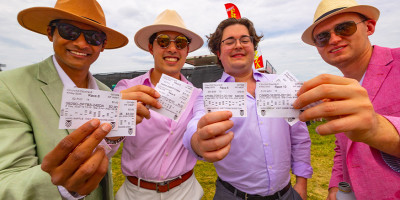
Place Your Bets winners won’t walk away with any actual earnings, but bragging rights are all in good fun! And guests can take their “winning” ticket home as a souvenir of the Derby Museum experience.
(Vintage photos ©Churchill Downs Racetrack)